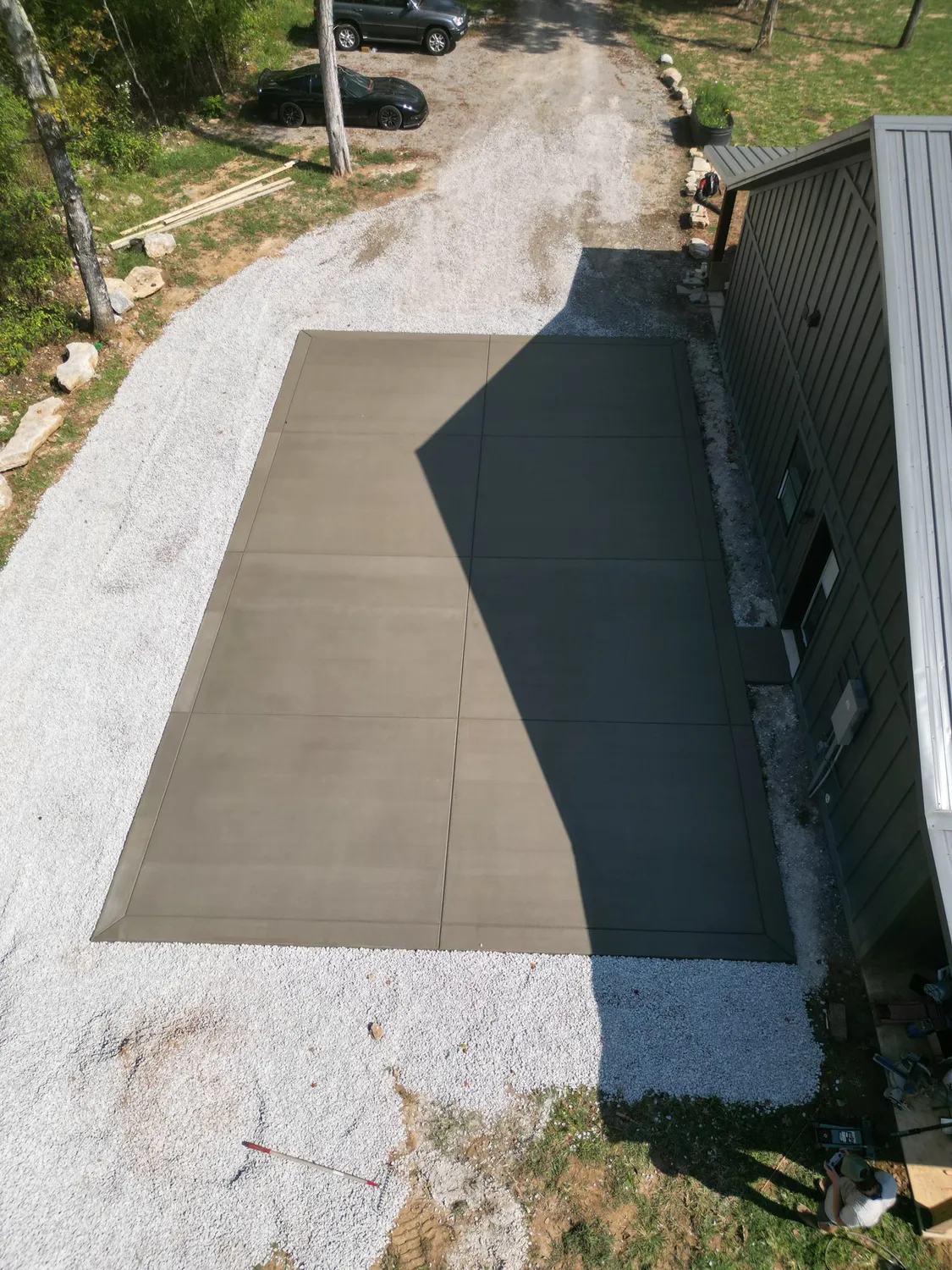
Choosing between stamped concrete and pavers depends on your priorities for style, durability, and maintenance. Stamped concrete offers a cost-effective, seamless surface with customizable patterns and colors, but may crack over time and requires sealing. Pavers provide superior durability, easier repairs, and greater design flexibility, though they tend to cost more initially. To make the best choice for your space and lifestyle, explore the detailed differences that follow.
Key Takeaways
- Pavers are more durable, easier to repair, and better withstand ground movement and heavy loads over time.
- Stamped concrete offers a quicker, more cost-effective installation with customizable patterns and seamless appearance.
- Pavers provide greater design flexibility with varied colors, shapes, and textures for personalized aesthetic options.
- Both require regular maintenance: sealing and cleaning for stamped concrete, re-sanding and cleaning for pavers.
- Consider long-term costs and style preferences to choose between the modular, rustic look of pavers or the uniform, decorative surface of stamped concrete.
How Do Stamped Concrete and Pavers Differ in Appearance and Style?
Stamped concrete and pavers differ markedly in appearance and style due to their manufacturing processes and design flexibility. Stamped concrete offers extensive color options and a wide texture variety, allowing for intricate patterns and seamless surfaces that mimic natural materials. Its surface can be customized with stains, dyes, and overlays, creating a cohesive look. Additionally, stamped concrete can incorporate sustainable practices by using eco-friendly materials and techniques, aligning with environmentally conscious preferences. Pavers, by contrast, feature distinct individual units with inherent texture variations and a limited but diverse color palette. The modular nature of pavers results in a more segmented visual, emphasizing individual elements rather than a continuous surface. These differences influence the overall aesthetic and stylistic options for your outdoor space.
Which Material Is More Cost-Effective for Your Budget?
When evaluating the cost-effectiveness of stamped concrete versus pavers, it’s important to take into account both initial installation costs and ongoing maintenance.
Stamped concrete typically offers lower upfront expenses and faster installation, making it more budget-friendly initially.
However, its material aesthetics and color options may be limited compared to pavers, which tend to have a broader range of styles and colors, potentially increasing long-term value.
Pavers may require more maintenance and repairs over time, affecting overall costs.
Ultimately, your choice hinges on weighing the initial savings against aesthetic versatility and ongoing upkeep, aligning with your budget priorities.
How Durable Are Stamped Concrete and Pavers in High-Traffic Areas?
High-traffic areas demand surfaces that can withstand constant use without significant deterioration. Both stamped concrete and pavers demonstrate durability, but their performance varies.
Stamped concrete offers a broad range of color options and texture variety, enhancing aesthetic resilience under heavy foot traffic. Its surface is prone to cracking over time if not properly installed or maintained, especially in freeze-thaw conditions.
Pavers, however, provide superior durability due to their individual units, which absorb movement without cracking. Their color options remain stable, and their texture variety contributes to slip resistance.
What Maintenance Is Required for Stamped Concrete Compared to Pavers?
Maintaining stamped concrete requires regular sealing to protect against moisture penetration, surface wear, and color fading, especially in climates with freeze-thaw cycles. Sealing requirements typically involve resealing every 2-3 years to preserve the surface’s integrity and appearance.
Cleaning routines should include routine sweeping and gentle washing with a mild detergent to remove debris and prevent stains.
Unlike pavers, which can be lifted and replaced individually, stamped concrete demands consistent sealing to prevent surface deterioration.
Proper maintenance ensures longevity and aesthetic appeal, but it requires diligent adherence to sealing schedules and routine cleaning to minimize damage and preserve the decorative finish effectively.
Can You Easily Repair or Replace Pavers and Stamped Concrete?
Repairing or replacing pavers is generally more straightforward than with stamped concrete due to their modular nature. Pavers can be individually lifted and replaced, making targeted repairs easier, especially when addressing specific color options or texture variety variations that may fade or crack over time.
In contrast, stamped concrete repairs often involve patching or resurfacing, which can be complex and may not seamlessly match the original pattern or color. While pavers offer a practical advantage for localized fixes, stamped concrete’s uniform surface complicates selective repairs, requiring more extensive work to restore the aesthetic integrity of the installation.
Which Option Offers Greater Design Flexibility and Customization?
When comparing design flexibility and customization options, pavers generally offer a broader range due to their modular nature. You can select from a wide array of color options, enabling precise coordination with your landscape or architecture.
The texture variety of pavers also allows for diverse surface finishes, from smooth to textured, enhancing tactile and visual appeal.
In contrast, stamped concrete options are more limited in color palette and pattern diversity, though they can mimic more complex designs.
How Do Installation Times and Processes Compare?
The installation processes for stamped concrete and pavers differ considerably in regards to duration and complexity.
Stamped concrete involves pouring a single concrete slab, which requires surface preparation, curing time, and the application of decorative patterns. This process extends the timeline by several days.
Paver installation demands precise material sourcing, as each unit must be carefully laid and aligned. It often takes longer due to individual placement and leveling.
While stamped concrete offers quicker coverage once poured, the detailed craftsmanship needed for decorative patterns can add time. Conversely, pavers provide flexibility in installation pace but generally require more overall labor hours.
What Are the Long-Term Costs and Benefits of Each Material?
Considering the installation processes and their complexities, evaluating the long-term costs and benefits of stamped concrete versus pavers becomes essential.
Stamped concrete generally offers lower initial costs but requires regular sealing to maintain durability and color consistency, which adds ongoing maintenance expenses.
Pavers, though more expensive upfront, provide easier repairability and less frequent sealing needs.
Over time, pavers tend to retain their appearance longer with minimal cracking, reducing repair costs.
Conversely, stamped concrete’s susceptibility to cracking can lead to higher long-term replacement or repair costs.
Your choice impacts ongoing maintenance, with sealing requirements and aesthetic longevity being critical factors in total cost analysis.
Which Surface Performs Better in Different Climate Conditions?
Climate conditions markedly influence the durability and performance of stamped concrete and pavers, making it essential to evaluate how each material responds under varying environmental stresses.
Pavers offer superior climate adaptation due to their ability to shift and expand with seasonal effects, reducing cracking risks.
Conversely, stamped concrete is more susceptible to damage from freeze-thaw cycles, especially if improperly sealed, leading to surface spalling.
In hot climates, pavers resist heat better, while stamped concrete may soften or fade.
Understanding these seasonal effects helps you select a material optimized for your specific climate, ensuring longevity and minimal maintenance.
How Do You Choose the Best Patio Material for Your Home and Lifestyle?
Selecting the appropriate patio material requires analyzing how well it aligns with your home’s architecture, your lifestyle, and your maintenance preferences. Consider garden aesthetics to guarantee visual harmony and material sustainability to support eco-friendly choices.
For high-traffic, low-maintenance needs, pavers offer durability and ease of repair, while stamped concrete provides customizable designs that enhance aesthetic appeal.
Evaluate how each material integrates with your landscape and usage patterns—such as hosting or relaxation—to optimize functionality.
Balancing these factors helps you select a patio surface that complements your home’s style, meets sustainability goals, and fits your ongoing maintenance requirements for long-term satisfaction.
Conclusion
Ultimately, choosing between stamped concrete and pavers depends on your specific needs, budget, and climate considerations. Stamped concrete provides a seamless, customizable surface with lower initial costs but may require more maintenance over time. Pavers offer superior durability, easier repair, and better performance in extreme weather conditions. To learn more, contact Providence Concrete by calling us today at (615) 956-9461 or visit us online at [Providence Concrete](https://providenceconcretetn.com/). Carefully evaluate installation, long-term costs, and aesthetic preferences to make an informed decision that best suits your lifestyle and property demands.