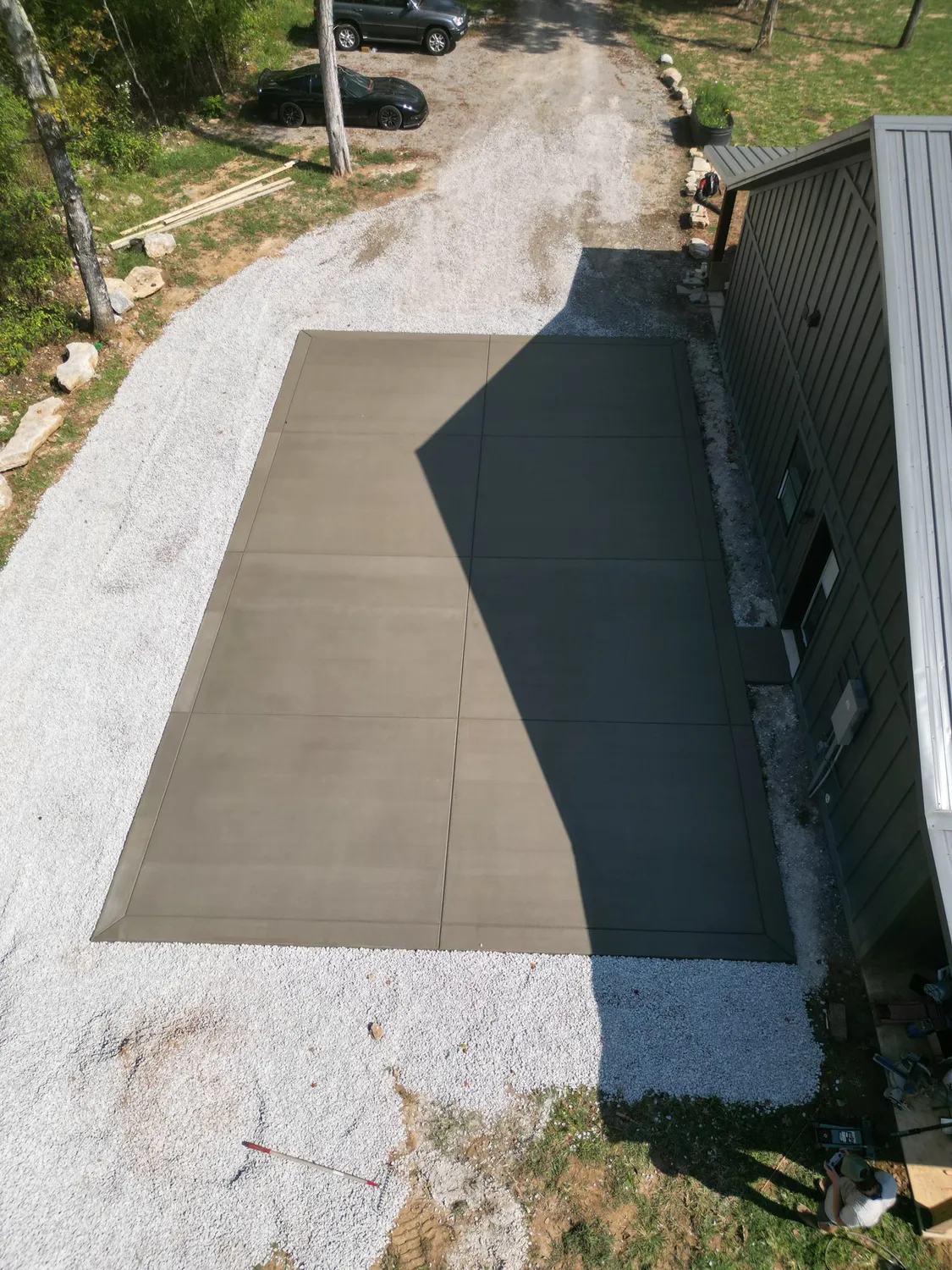
To install a concrete slab for garages, sheds, or workshops, start with careful site selection, guaranteeing proper drainage and environmental assessments. Excavate, level, and compact the soil before building sturdy formwork and placing reinforcement like rebar or wire mesh. Pour the concrete evenly, then finish and texture the surface for durability. Proper curing is essential for strength. Following these steps ensures a long-lasting, stable foundation—continue exploring to learn detailed techniques for each phase.
Key Takeaways
- Select a stable, well-drained site, obtain necessary permits, and assess soil conditions before starting construction.
- Build accurate formwork and properly reinforce the foundation to ensure long-term durability.
- Use quality concrete, pour evenly, and finish the surface smoothly for a strong, aesthetic slab.
- Cure the concrete adequately, keep it moist, and protect it from environmental stressors during the curing process.
- Maintain the slab regularly with cleaning, sealing, and repairs to extend lifespan and ensure safety.
Planning Your Concrete Slab: Site Selection and Permits
Selecting the appropriate site and obtaining necessary permits are critical first steps in concrete slab installation. You must evaluate landscape integration to guarantee the slab complements surrounding features and maintains proper drainage.
Weather considerations are essential; plan for seasonal conditions that could affect curing and setting times, such as avoiding extreme cold or heat.
Permits are indispensable to adhere to local building codes and zoning regulations, preventing future legal issues.
Choosing a site with stable soil and minimal environmental impact supports long-term durability.
Preparing the Site: Excavation, Grading, and Compaction
Once you’ve determined the site and secured necessary permits, the next step is to prepare the ground for the concrete slab. Begin with excavation to remove existing soil and debris, ensuring a level base.
Assess soil stability; unstable or loose soil can compromise slab integrity. Grade the surface to facilitate proper drainage solutions, preventing water pooling beneath the slab.
Use compaction equipment to densify the soil, reducing future settling. Proper excavation, grading, and compaction are essential to establish a solid foundation that promotes soil stability and effective drainage, ultimately ensuring the durability and longevity of your concrete slab. Incorporating quality craftsmanship and proper site preparation can significantly extend the lifespan of your concrete installation.
Building the Formwork: Creating the Mold for Your Concrete
Building the formwork is a critical step in shaping your concrete slab, as it defines the final dimensions and surface level. Focus on formwork design to guarantee accurate alignment and stability.
Use durable mold materials such as plywood, lumber, or metal, selected for strength and ease of assembly. Proper bracing and secure fastening prevent deformation under wet concrete.
Measure and mark dimensions precisely, and verify levelness before constructing the mold. Make certain formwork edges are smooth to achieve a clean surface finish.
Accurate formwork construction guarantees the slab’s structural integrity and dimensional accuracy, making it essential to follow precise techniques during this stage.
Installing Reinforcement: Steel Rebar and Wire Mesh for Strength
Installing reinforcement involves properly positioning steel rebar and wire mesh within the formwork to guarantee the concrete slab attains the necessary strength and durability.
Lay out steel reinforcement in a grid pattern, ensuring rebar is spaced according to structural requirements. Use spacers or chairs to elevate the steel above the form’s bottom, maintaining uniform coverage.
Secure the wire mesh with ties to prevent displacement during pouring. Confirm that all reinforcement elements are free of rust and debris, and that they’re correctly positioned to distribute loads evenly.
Proper placement of steel reinforcement and wire mesh ensures maximum strength and crack resistance in the finished concrete slab.
Choosing the Right Concrete Mix: Types and Specifications
Selecting the appropriate concrete mix is essential to guarantee your slab meets structural and durability requirements. Consider the concrete’s strength grade, typically measured in PSI, to match load-bearing needs.
For aesthetic purposes, choose a concrete color that complements your project’s design.
Admixture options, such as accelerators, retarders, or air-entraining agents, enhance performance under specific conditions, like rapid setting or freeze-thaw resistance.
Ascertain the mix contains the right proportions of cement, aggregate, and water to achieve desired workability and strength.
Precise specifications help prevent cracking, scaling, or surface imperfections, providing a durable foundation for your garage, shed, or workshop.
Pouring the Concrete: Step-by-Step Filling and Spreading
Have you prepared your reinforcement and formwork properly?
Begin pouring the concrete from one corner, allowing it to flow evenly across the slab. Use a shovel or rake to spread the mix in a controlled manner, guaranteeing consistent thickness. Work quickly to maintain color consistency and prevent segregation.
Distribute the concrete evenly, avoiding voids or air pockets that could affect surface texture. Use a straightedge or screed to level the surface precisely at the desired height. Keep the flow steady to guarantee uniformity.
Proper pouring minimizes inconsistencies, facilitating a smooth surface texture and consistent color throughout the slab.
Finishing Techniques: Smoothing, Troweling, and Texturing
Once the concrete has been poured and leveled, you should immediately begin finishing to achieve a smooth, durable surface. Use finishing tools such as trowels and floats to smooth the surface and eliminate imperfections.
During this process, focus on consistent pressure and overlapping passes for uniformity. Surface texturing can be added by employing broom finishes or stamping tools, depending on your desired aesthetic and slip resistance.
Proper timing is critical; work while the concrete remains workable but begins to set. These techniques guarantee a high-quality finish, enhancing the slab’s durability and appearance.
Curing the Slab: Ensuring Proper Strength Development
Proper curing is essential to guarantee the concrete slab develops its full strength and durability. Effective curing methods focus on moisture control to prevent premature drying and cracking.
You should keep the surface continuously moist through techniques like water curing, covering with plastic sheeting, or applying curing compounds.
Maintaining ideal moisture levels for at least seven days ensures hydration and proper curing.
Consistent moisture retention minimizes surface shrinkage and enhances strength development.
Avoid rapid drying by controlling environmental conditions.
Precise moisture management during curing directly impacts the slab’s long-term performance, guaranteeing maximum durability and structural integrity.
Common Mistakes to Avoid During Installation
Incorrectly preparing the subgrade or failing to set accurate elevation and slope can substantially compromise the slab’s stability and drainage. Confirm the subgrade is properly compacted and leveled to prevent uneven settling.
Neglecting proper slope can cause water pooling, damaging the slab over time. Avoid rushing the process, which may lead to inconsistent surface finishes.
When considering decorative finishes, choose colors carefully to avoid fading or uneven pigmentation, and coordinate with the overall aesthetic.
Poor planning in these areas can result in costly repairs and compromised durability. Precision during installation is essential to achieve a functional, visually appealing concrete slab that withstands future use.
Tips for Maintaining and Repairing Your Concrete Slab
Maintaining and repairing your concrete slab involves regular inspections and timely interventions to preserve its structural integrity and appearance. Effective sealing techniques are essential for crack prevention and moisture barrier protection.
Apply high-quality sealers periodically, especially in areas exposed to moisture or temperature fluctuations, to minimize surface deterioration. Monitor the slab for cracks or surface spalling, and address issues promptly with appropriate repair compounds.
Preventative maintenance, including sealing and crack monitoring, extends the slab’s lifespan, reduces costly repairs, and maintains safety.
Consistent upkeep guarantees your slab remains durable, stable, and visually appealing over its service life.
Conclusion
Following these detailed steps guarantees a durable, level concrete slab for your garage, shed, or workshop. Proper planning, site preparation, reinforcement, and finishing techniques are essential for long-lasting results. Avoid common pitfalls by adhering to best practices throughout the process. Regular maintenance and timely repairs will extend your slab’s lifespan, providing a reliable foundation for years to come. Precision and attention to detail are key to successful installation and peak performance. To learn more, contact Providence Concrete by calling us today at (615) 956-9461 or visit us online at [Providence Concrete](https://providenceconcretetn.com/).